Does eating late at night cause weight gain?
Eating late does not make the same food much more fattening, but it tends to bring extra calories, and controlled studies find it leaves people hungrier. If evenings are where your plan falls apart, moving food earlier in the day is worth a try.
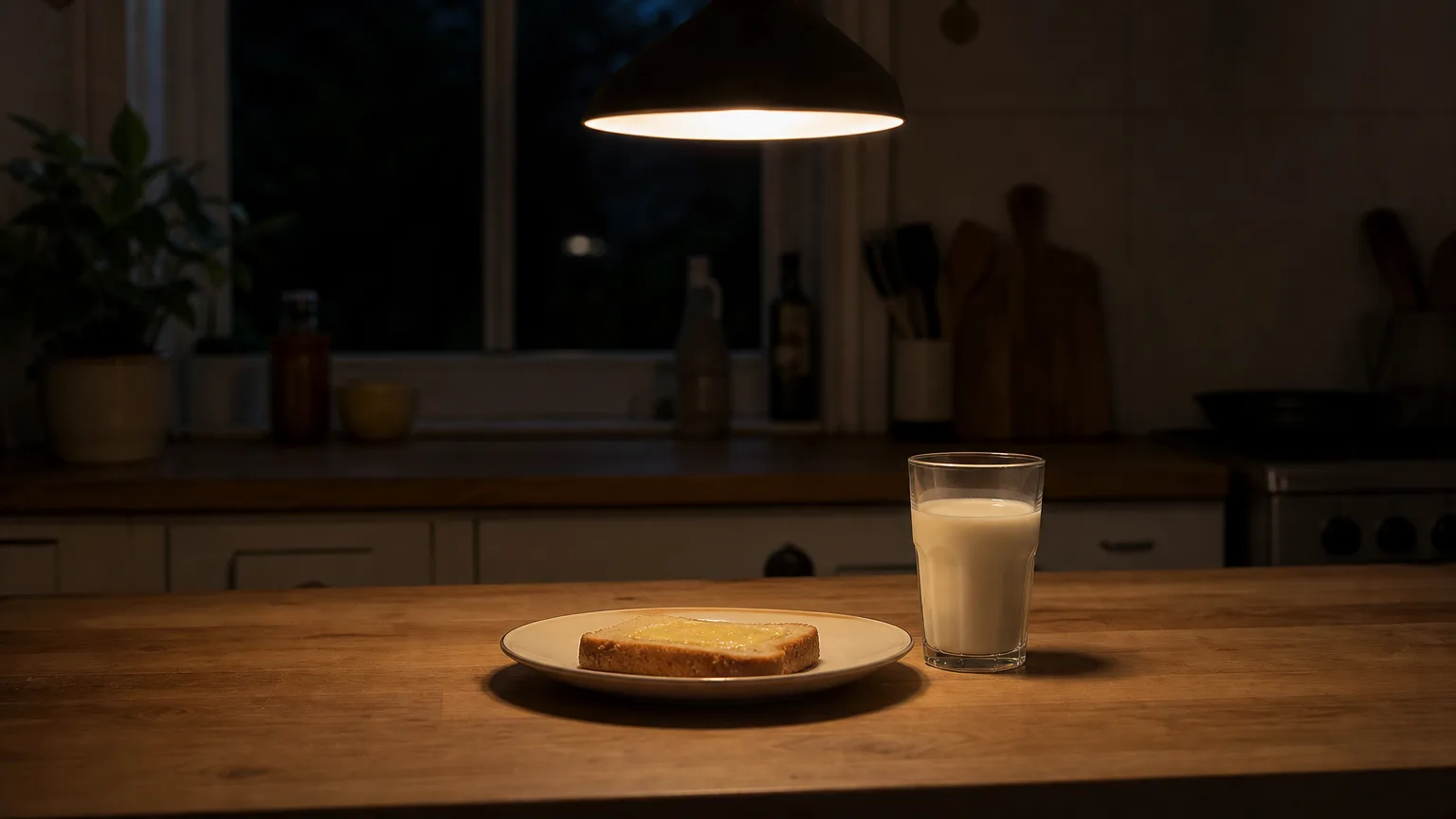
- When people eat the same food on an earlier or later schedule, weight loss is about the same. Total calories still decide the result.
- Late eating tends to raise hunger, and evening snacks are often extra calories on top of a full day.
- A bigger breakfast and lunch, and a planned evening snack, are more useful than a strict cut-off time.
Move calories earlier without strict rules
Three changes make late-night eating less likely, without a cut-off time.
Eat a real breakfast and lunch
Long gaps in the day often end in a large dinner and a snack after it. Aim for 25 to 30 grams of protein at breakfast and at lunch, so you reach the evening less hungry.
Plan an evening snack, if you want one
If you usually eat after dinner, put a snack of about 150 to 200 calories into the day's plan and log it in advance, so it fits rather than adds.
Close the kitchen after the snack
Put food away, brush your teeth and leave the kitchen. A clear end to eating makes the second and third snack less likely.
Does eating late at night cause weight gain?
Not directly. Your body does not store a calorie eaten at 10 p.m. as fat while burning one eaten at noon. In a controlled trial, people who ate the same calories with a large breakfast for four weeks and a large dinner for another four lost the same amount of weight and burned the same amount of energy.
Late eating still matters, for two reasons. It tends to make people hungrier, and evening food is often eaten on top of a full day, in front of a screen, when you are tired. Most of the weight effect of late eating comes from eating more, not from the clock.
What studies on meal timing show
In a tightly controlled study at Brigham and Women's Hospital, 16 adults with overweight or obesity ate identical meals on two schedules, one shifted later in the day. On the late schedule they were hungrier, the balance of their appetite hormones shifted toward hunger, and they burned slightly less energy while awake.
A second study tested the question over a longer stretch. Thirty adults on a calorie-restricted diet spent four weeks eating 45 percent of their calories at breakfast and four weeks eating 45 percent at dinner. Weight loss and energy use were the same either way, but people reported less hunger with the big breakfast.
Some studies do find a difference. Women given a 700-calorie breakfast and a 200-calorie dinner lost more weight over 12 weeks than women given the reverse. In a Spanish weight loss program of 420 people, those who ate their main meal after 3 p.m. lost less weight than earlier eaters. That study was observational, though, and the late eaters also ate smaller breakfasts or skipped them more often.
Taken together, timing seems to affect appetite more than metabolism. That still matters, because hunger is what makes a calorie target hard to keep.
Why late eating often means more eating
Evening eating is different from daytime eating. Dinner is often the largest meal, and the hours after it are when people are tired, relaxed and near the kitchen. Snacks eaten in front of a screen are easy to underestimate, and they are often the food people forget to log. A cup of ice cream is about 300 calories and an ounce of potato chips about 150, before any second helping.
- A light breakfast or a skipped lunch, which leaves you very hungry by evening.
- Drinks with dinner, which make it easier to keep eating. Our guide to alcohol and weight loss covers why.
- Eating straight from the bag or the box, with no set portion.
- Staying up late, which leaves more hours to eat.

Is there a time you should stop eating?
There is no proven cut-off for weight loss. A rule like no food after 7 p.m. works for some people because it removes the evening snack, not because of the clock. If it helps you, use it. If it leaves you hungry at bedtime, a planned snack is better.
There is a reason to leave some space before bed if you get heartburn. The National Institute of Diabetes and Digestive and Kidney Diseases suggests eating meals at least 3 hours before you lie down if you have reflux symptoms at night.
How to cut back on late-night snacking
The aim is not to ban evening food but to make it a choice you made earlier in the day.
- Front-load protein. Having 25 to 30 grams at breakfast and lunch helps you reach dinner less hungry. Our guide to protein for weight loss has examples.
- Plan the snack. Choose it at dinner, put a portion in a bowl and log it, rather than deciding at 10 p.m.
- Ask whether you are hungry or tired. If you are tired, the fix is going to bed.
- Keep snack foods out of sight and out of easy reach.
- Brush your teeth after your last planned snack, as a signal that eating is done for the day.
Better late-night snacks if you are hungry
If you are truly hungry late in the evening, eat something. Going to bed very hungry can make the next morning harder. Pick snacks with protein or fiber that come in a set portion. These figures are from USDA data.
- Plain Greek yogurt, a 5.3-ounce cup: about 100 calories and 15 grams of protein.
- Air-popped popcorn, 3 cups: about 90 calories.
- A small apple with a tablespoon of peanut butter: about 200 calories and 4 grams of protein.
- A pear: about 105 calories, with fiber to make it filling.
Does a big breakfast help you lose weight?
It may help with hunger more than with weight. In the four-week crossover study, a big breakfast did not change weight loss or metabolism compared with a big dinner, but people felt less hungry through the day. If you are not hungry in the morning, there is no need to force a big breakfast; moving some food to lunch is a gentler way to eat earlier.
If you are thinking about a strict eating window instead, our comparison of intermittent fasting and calorie counting covers what the trials found.
Look at when your calories come from
Your log can answer the question for you. Check how much of your day lands at dinner and after. If evenings regularly hold half your calories or more, try moving 200 to 300 calories to breakfast or lunch for two weeks, and watch your hunger and your weight trend.
In BiteTracker, every entry goes under breakfast, lunch, dinner or snacks, so you can see how much of the day is in the evening. Plan tomorrow's meals on the calendar tonight, including the evening snack, and the daily totals will tell you whether the day fits before you start it.

Frequently asked questions
Is it bad to eat right before bed?
Not for weight, as long as the food fits your daily calories. If you get heartburn or reflux at night, finishing meals at least 3 hours before lying down may help. A small, planned snack is fine for most people.
What time should you stop eating to lose weight?
There is no proven cut-off. A rule like no food after 7 or 8 p.m. can help if it removes an evening snack you do not need, but total calories over the week are what decide weight loss.
Does skipping dinner help you lose weight?
Only if it lowers your total calories. Skipping dinner often leads to a larger snack later in the evening. A smaller dinner, with more food earlier in the day, is usually easier to keep up.
Is a big breakfast better for weight loss?
In a controlled study, a big breakfast and a big dinner led to the same weight loss over four weeks, but people felt less hungry with the big breakfast. If it keeps your evening hunger down, it is worth trying.
Plan tomorrow's meals in BiteTracker
Drag meals onto the calendar, including an evening snack, and the daily totals show whether the day fits before you start it.
Sources
- Late isocaloric eating increases hunger, decreases energy expenditure, and modifies metabolic pathways in adults with overweight and obesity, Vujović N et al., Cell Metabolism, 2022
- Timing of daily calorie loading affects appetite and hunger responses without changes in energy metabolism in healthy subjects with obesity, Ruddick-Collins LC et al., Cell Metabolism, 2022
- High caloric intake at breakfast vs. dinner differentially influences weight loss of overweight and obese women, Jakubowicz D et al., Obesity, 2013
- Timing of food intake predicts weight loss effectiveness, Garaulet M et al., International Journal of Obesity, 2013
- Eating, Diet, & Nutrition for GER & GERD, National Institute of Diabetes and Digestive and Kidney Diseases
This article is general information, not medical advice. If you have a health condition, talk to your doctor or a registered dietitian before changing how you eat.