How to track calories when eating out
Knowing how to track calories when eating out keeps one dinner from derailing your week. Use posted numbers at chains, estimate other plates by their parts, and budget for the oil, bread and drinks you cannot see.
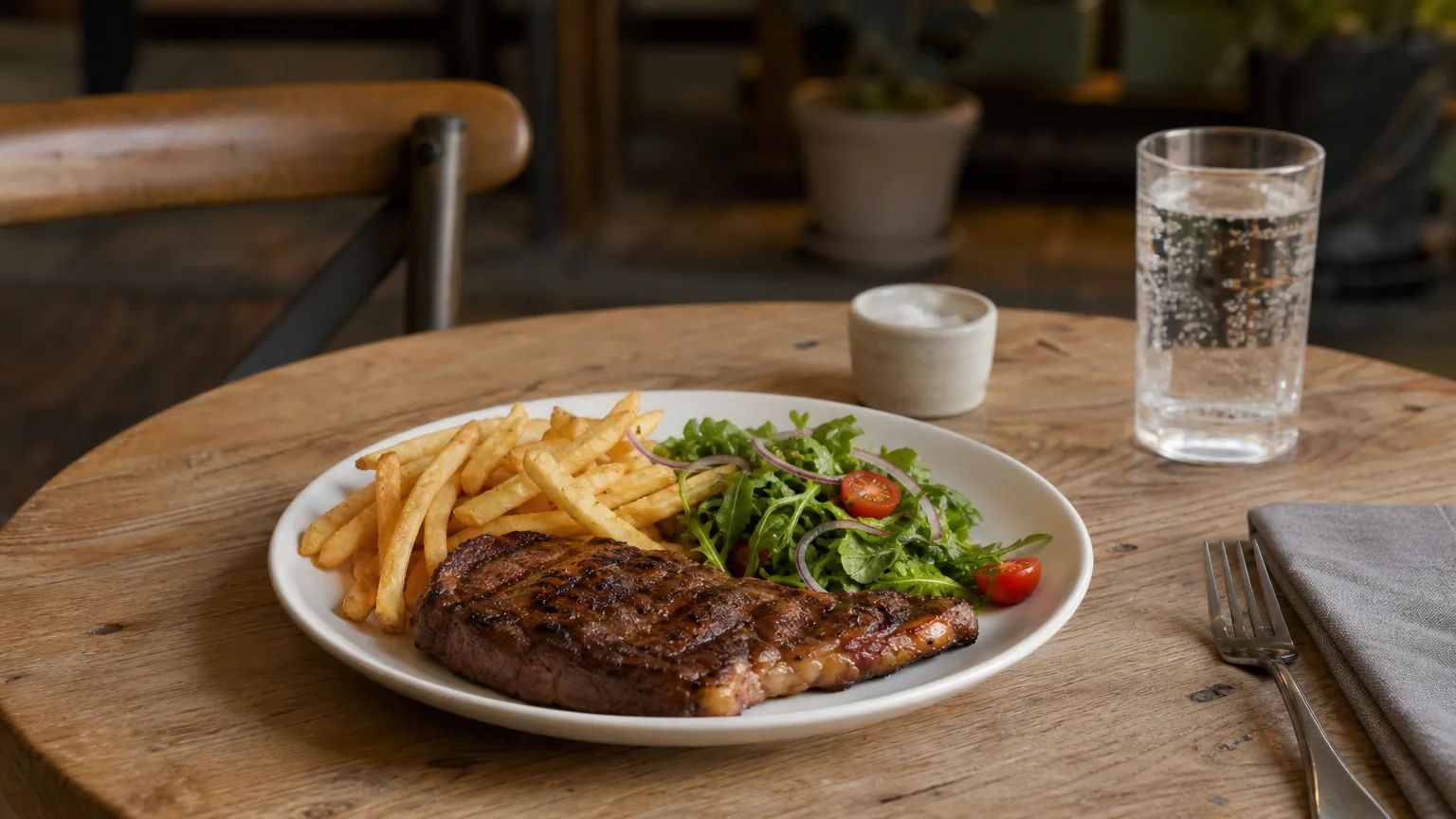
- US restaurant chains with 20 or more locations must post calories for standard menu items. Use those numbers first.
- At independent restaurants, estimate by component: protein, starch and vegetables, then add cooking fat, bread and drinks.
- Measured restaurant meals average around 1,200 calories. Expect a big number, log it honestly and judge the week, not the evening.
Track calories when eating out in three moves
You do not need the exact recipe. You need a fast, repeatable way to land in a reasonable range and get back to your evening.
Check for posted numbers first
If the restaurant is a chain, the calories are on the menu or menu board, and often on its website. Search the exact item name, log the posted figure, and adjust for anything you changed, such as swapping fries for a side salad or adding cheese.
Build the plate from components
Anywhere else, split the dish into parts and estimate each one: a 6-ounce salmon fillet, a cup and a half of rice, a side of vegetables. Describe it in a sentence or take a photo, then check the portions. Our guide to how accurate photo calorie tracking is explains what a camera can and cannot see.
Add the extras on purpose
Bread before the meal, the butter on the vegetables, a second drink and a few bites of shared dessert are where restaurant meals drift. Add each as its own line and round up rather than down.
How to track calories when eating out
To track calories when eating out, log the posted calories if the restaurant is a chain. Otherwise, estimate the plate by its parts: protein, starch, vegetables and sauce, plus about a tablespoon of cooking fat. Add drinks, bread and dessert as separate entries, round up when you are unsure, and log before you leave the table.
That estimate will not be exact, and it does not need to be. The goal is a number in the right range, logged the same day, so your weekly average stays honest. A rough entry is far more useful than the blank day most people record after a meal they cannot measure.
How many calories are in a typical restaurant meal?
More than most people guess. A multisite study that measured frequently ordered restaurant meals in a lab found that meals at independent, non-chain restaurants averaged about 1,205 calories, similar to chain restaurants. American, Italian and Chinese meals were the highest, averaging about 1,495 calories.
The same study found that 92% of meals contained more calories than a typical person needs at a single meal. That is not a reason to stop eating out. It is a reason to expect a large number, so the entry does not feel like a failure when you see it.
How to use posted calories at chain restaurants
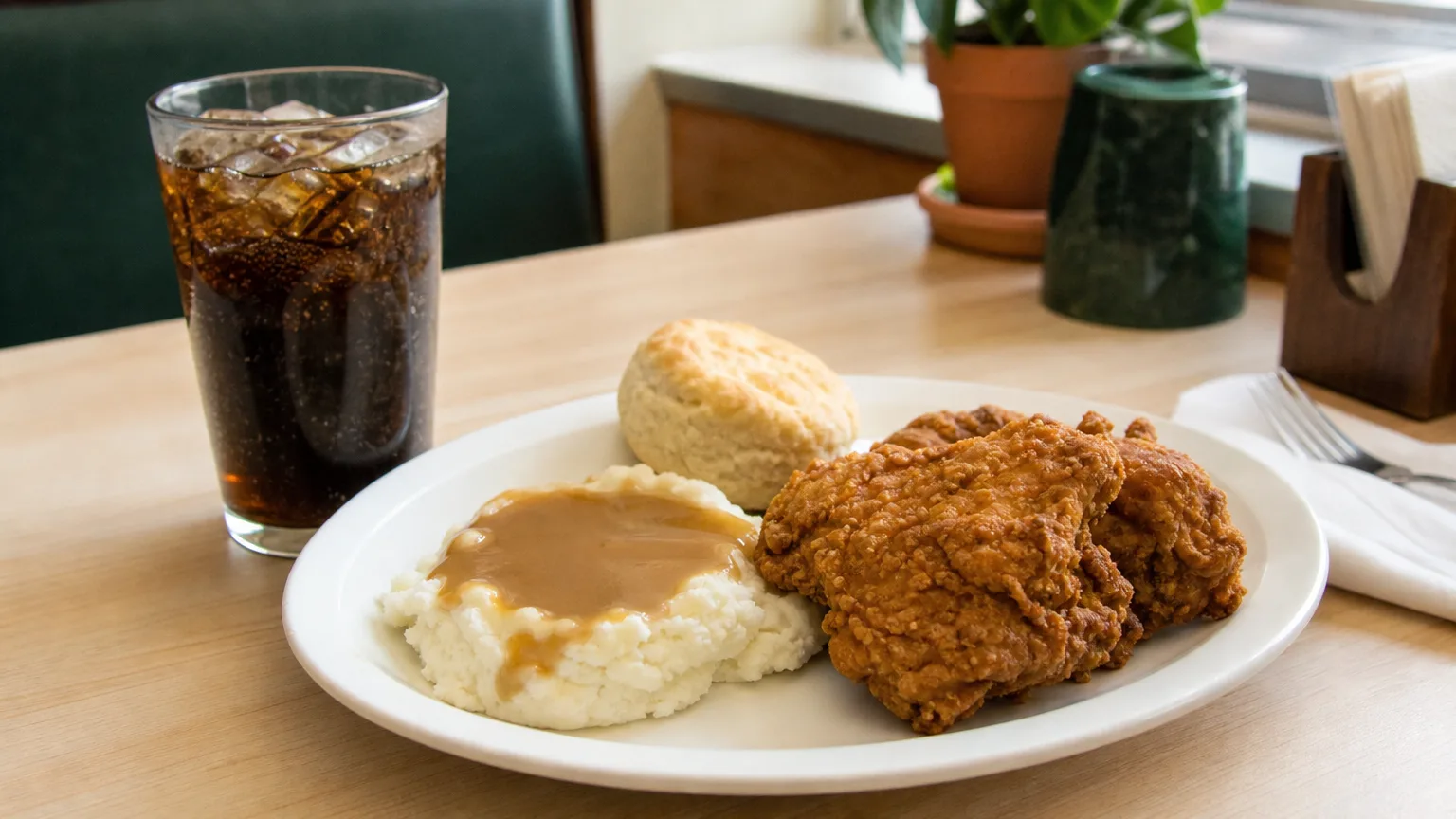
Under FDA menu labeling rules, restaurant chains with 20 or more locations must post calories for standard menu items. They must also provide more detail on request, including total fat, saturated fat, sodium, carbohydrates, sugars, fiber and protein. That makes chains the easiest meals out to log well, including macros.
- Search the exact menu item name, so your entry matches the posted figure.
- Adjust for changes: a swapped side, extra sauce, added cheese or avocado.
- If the portion looks bigger than standard, log 1.25 servings instead of 1.
- Log the drink as its own line. A large regular soda can add 250 calories or more.
How do you estimate calories at a non-chain restaurant?
Break the plate into parts and use your hand as the measuring tool. A palm of cooked meat or fish is roughly 3 to 4 ounces, a cupped hand of rice or pasta is about half a cup, and a fist is about a cup. Our guide to tracking macros without a food scale has more of these anchors.
Here is a worked example for grilled salmon with rice, vegetables and a bread roll:
- Salmon, about 6 ounces cooked (two palms): around 350 calories.
- White rice, about 1.5 cups: around 300 calories.
- Vegetables, about 1 cup: around 50 calories.
- Cooking fat and butter sauce, about 2 tablespoons: around 200 to 240 calories.
- One bread roll with butter: around 150 to 200 calories.
- Total: about 1,050 to 1,150 calories, close to the restaurant average above.
How to estimate mixed dishes like pasta, curry and stir-fry
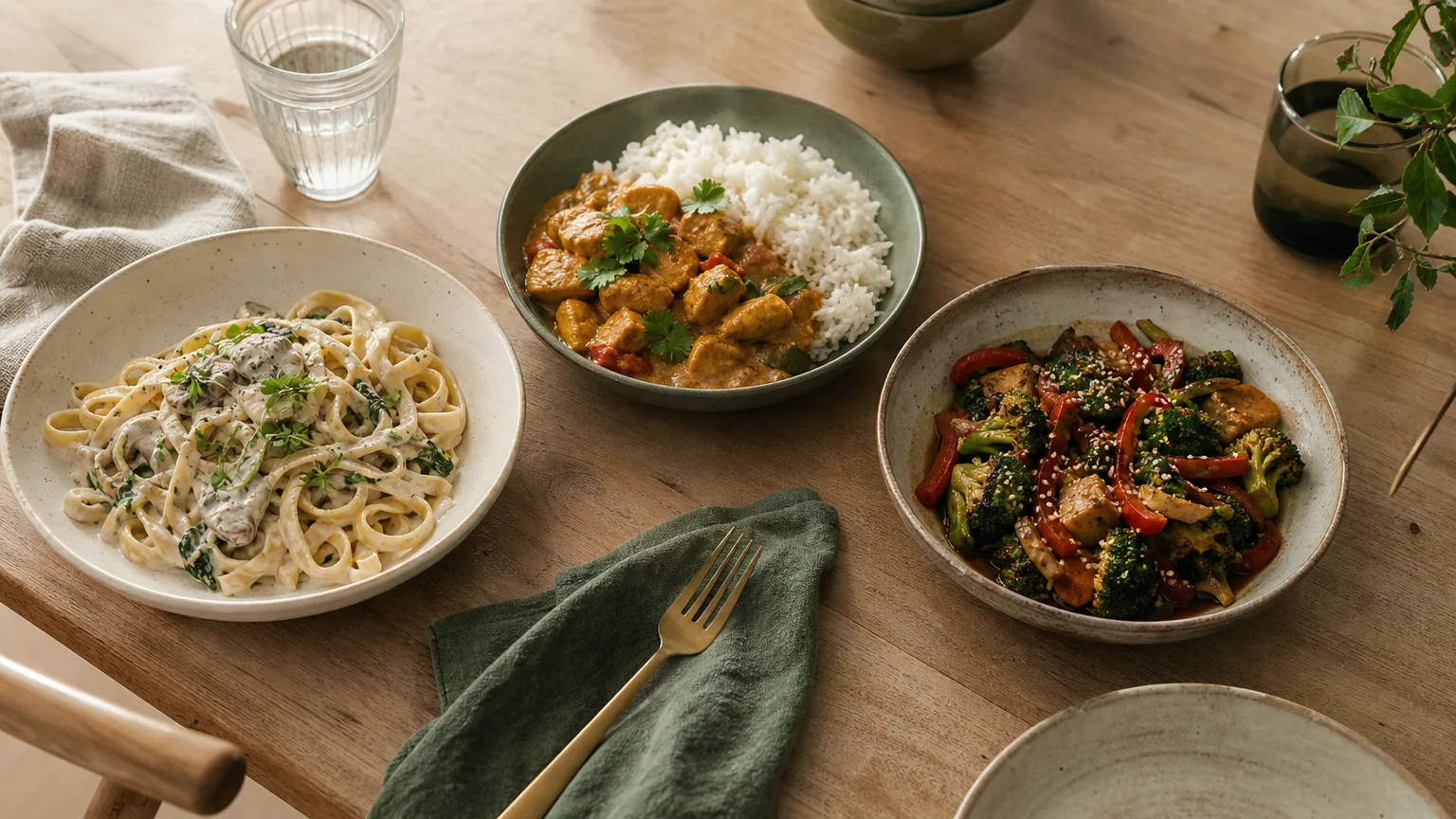
Mixed dishes hide their parts, so estimate the volume instead. Picture the plate or bowl in cups, choose a similar dish from the food database, and scale it to that amount. A restaurant pasta or noodle dish is often 2 cups or more, well above the single cup many database entries assume.
Then add fat if the sauce looks glossy, creamy or oily: about one tablespoon of oil or butter, roughly 100 to 120 calories, for a typical main. A cream or cheese sauce can carry more than that, so round up when in doubt.
Why restaurant meals have more calories than home cooking
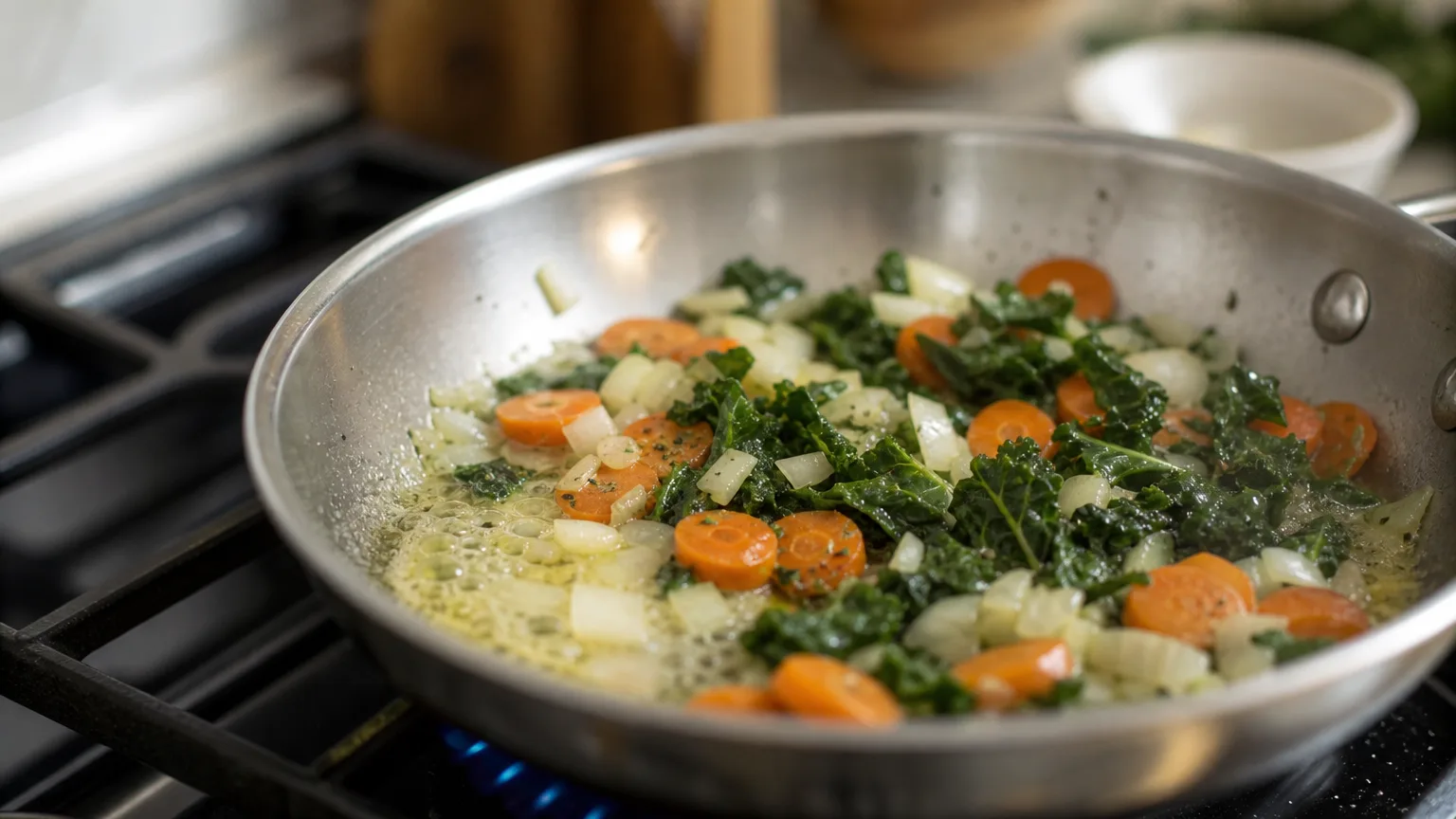
Portions are larger, and kitchens cook for flavor rather than for your target. Vegetables are sauteed in oil or finished with butter, grains are often cooked with fat, and dressings are poured generously. Very little of that is visible on the plate.
That is why rounding up is more accurate than rounding down. If you are unsure whether a dish was cooked with one tablespoon of oil or two, log two. Asking for dressing or sauce on the side also helps, because you can see what you use. For typical amounts, see our list of hidden calories in oils, sauces and drinks.
How to fit a meal out into your calorie target
Plan ahead instead of compensating afterward. If dinner will be around 1,200 calories, keep breakfast and lunch lighter and built around protein and vegetables, so you arrive hungry but not starving. Skipping meals entirely tends to backfire, because it is harder to order sensibly when you are ravenous.
Then judge the week. If dinner out is about 600 calories more than your usual dinner, it adds roughly 85 calories a day to your weekly average (600 ÷ 7). That is small enough to absorb. If your meals out cluster on Saturdays and Sundays, our guide to tracking calories on weekends shows how to plan around them.
What to do if you forgot to log the meal
Log it the next morning from memory, even roughly. Pick the closest menu item or a similar dish, add the drinks you remember and round up. A late estimate still keeps your weekly average closer to the truth than a blank, and our guide on what to do when you forget to log a meal covers the rest.
In BiteTracker, you can describe the meal in a sentence, like 'grilled salmon, a cup and a half of rice, vegetables and a roll with butter', or snap a photo before you eat. Review the suggested portions and save. The weekly report shows your average calories, so one big evening stays in proportion.
Frequently asked questions
Do restaurants have to list calories?
In the US, restaurant chains with 20 or more locations must post calories for standard menu items and provide fuller nutrition information on request, including fat, sodium, carbohydrates, sugars, fiber and protein. Independent restaurants and small chains generally do not have to, though some share nutrition information anyway.
Are restaurant calorie counts accurate?
Posted calories describe the standard recipe and portion, so the plate you receive can differ, especially when it is prepared by hand or you change the order. Treat the posted number as a good starting point and adjust upward if the portion looks large or extra sauce, butter or cheese was added.
Should I eat less before going out to dinner?
Eating a little lighter earlier in the day is a reasonable way to make room for a bigger dinner. Keep those meals built around protein and vegetables rather than skipping them, because arriving very hungry usually leads to eating more bread, appetizers and dessert than you planned.
How do I log alcohol at a restaurant?
Log each drink as its own entry when you order it. As a rough guide, a 12-ounce regular beer is about 150 calories and a 5-ounce glass of wine about 120. Cocktails vary widely, and sweet or creamy ones can run several hundred calories, so choose a similar drink and round up.
Describe or photograph a restaurant plate in BiteTracker
Get a quick AI estimate at the table, review the portions, and let the weekly report keep one big dinner in proportion.
Sources
- Energy Contents of Frequently Ordered Restaurant Meals…: A Multisite Randomized Study, Urban LE et al., Journal of the Academy of Nutrition and Dietetics, 2016
- Menu Labeling Requirements, U.S. Food and Drug Administration
- FoodData Central, U.S. Department of Agriculture
This article is general information, not medical advice. If you have a health condition, talk to your doctor or a registered dietitian before changing how you eat.