Should you weigh food raw or cooked when counting calories?
Weighing food raw or cooked both work for calorie tracking, as long as the entry you log matches the state you weighed. Here is how much common foods change in the pan, what a mismatch costs, and how to convert a cooked portion back to raw.
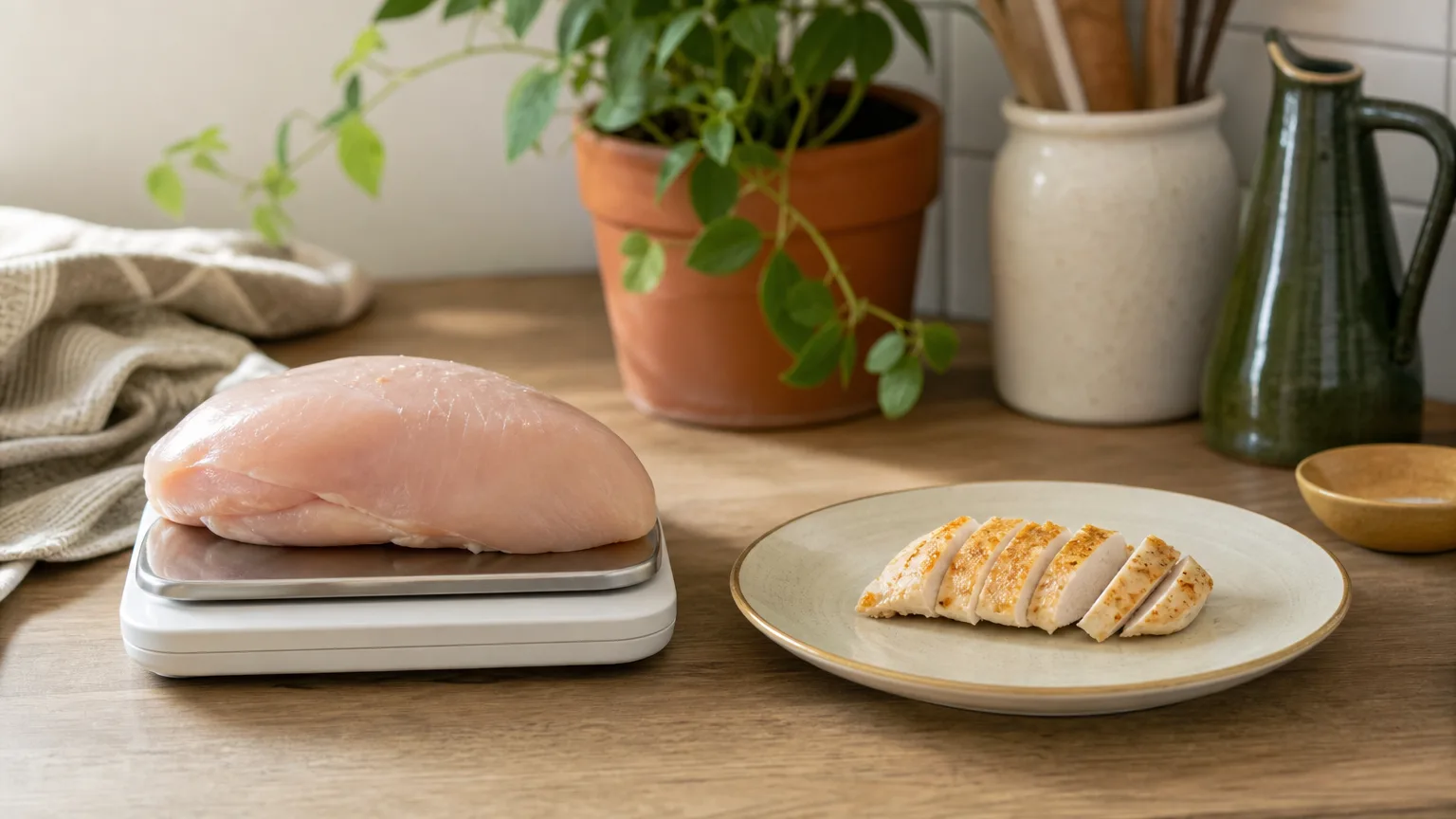
- Either works. Weigh raw and log a raw entry, or weigh cooked and log a cooked entry. Mixing the two is the error.
- Raw is the more consistent choice, because package labels describe food as sold and cooking changes weight by different amounts each time.
- Meat loses roughly a quarter of its weight in cooking. Rice roughly triples and pasta more than doubles.
Weigh it one way, log it the same way
Raw or cooked matters much less than making sure the weight and the database entry describe the same food.
Weigh raw when you can
Meat, rice, pasta, oats and lentils are labeled raw or dry. Weighing them before cooking lets you use the label or a barcode scan directly.
Weigh cooked when you must
Leftovers, shared pots, rotisserie chicken and food someone else cooked can only be weighed cooked. Pick an entry that says cooked, grilled, boiled or roasted.
Check the entry's wording
Before you save, read the entry name. If it does not say raw, dry or cooked, compare its calories per 100 grams with the table below to see which it is.
Should you weigh food raw or cooked?
You can weigh food raw or cooked for calorie tracking, as long as the entry you log matches the state you weighed. Raw is the more consistent option: nutrition labels describe food as packaged, and raw weight does not depend on how long the food was cooked. Cooked weight is fine when it is all you have, provided you choose a cooked entry.
The calories do not change much in the pan. The weight does, and by a lot. That is why 100 grams means something very different before and after cooking.
Why weight changes when calories do not
Cooking mostly moves water. Meat, poultry and fish lose water as they cook, so they shrink and each gram becomes more concentrated. Rice, pasta, oats and dried beans absorb water, so they swell and each gram becomes more dilute. Water has no calories, so the total barely changes; it is spread over a different weight.
Fat is the one real exception. Fatty cuts such as bacon or 80% lean ground beef lose some fat into the pan, and food fried in oil absorbs some. Those changes are real, but for most home cooking they are much smaller than the water effect.
Raw and cooked calories for common foods
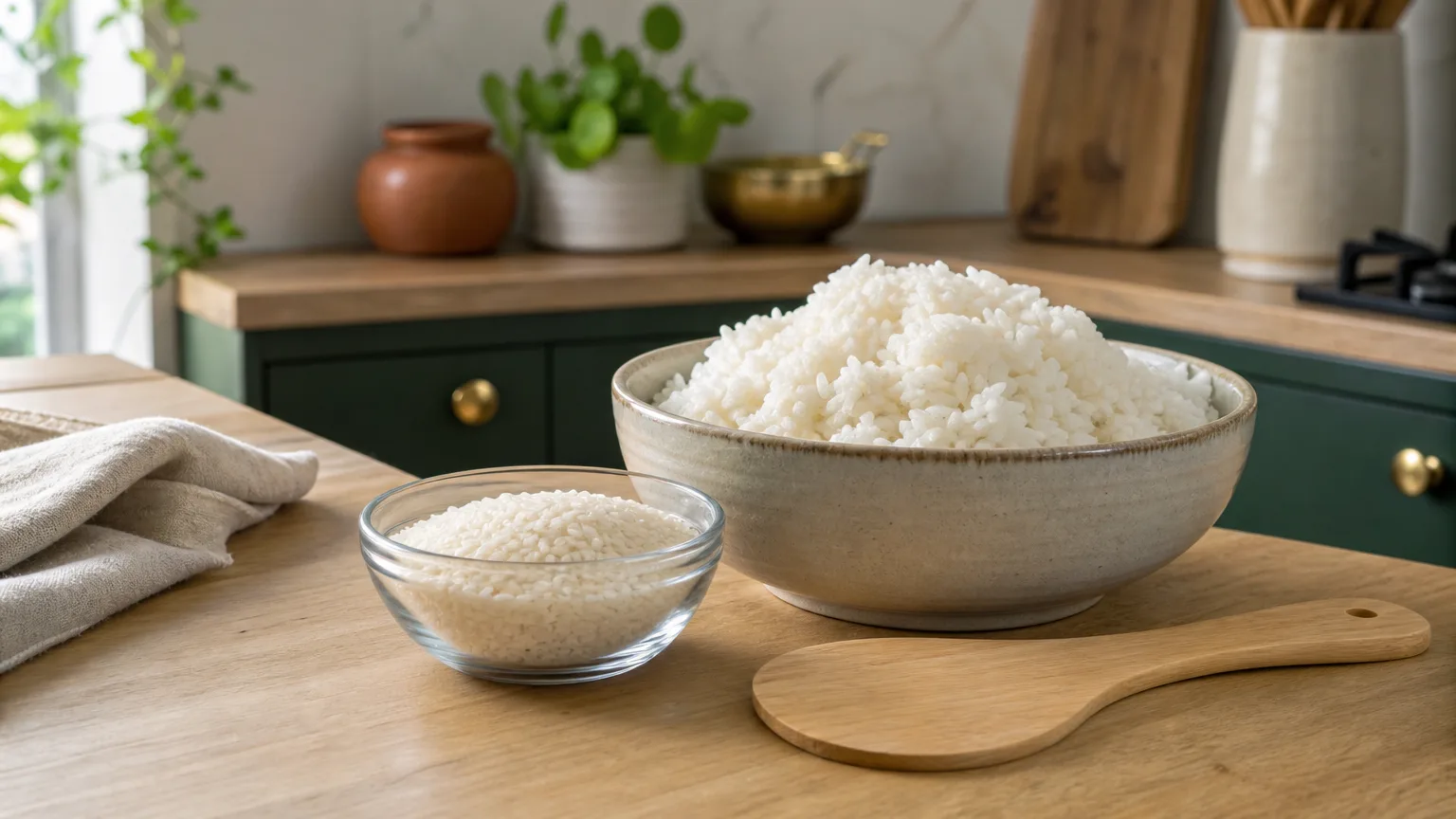
The same foods, per 100 grams, before and after cooking. These are plain versions with nothing added.
| Food | Raw or dry, per 100 g | Cooked, per 100 g | What cooking does to the weight |
|---|---|---|---|
| Chicken breast, skinless | About 120 calories | About 165 calories | Loses about a quarter |
| White rice | About 365 calories | About 130 calories | Roughly triples |
| Pasta | About 370 calories | About 160 calories | A little more than doubles |
| Lentils | About 350 calories | About 115 calories | Roughly triples |
| Potato, with skin | About 77 calories | About 93 calories, baked | Loses a little water |
- A quick check for any database entry: if chicken breast shows about 120 calories per 100 grams, the entry is raw. If it shows about 165, it is cooked.
- For rice and pasta the gap is so large that a mix-up is easy to spot: about 365 calories per 100 grams is dry, and about 130 to 160 is cooked.
What a mismatch costs
Logging a cooked weight against a raw entry, or the other way round, is one of the biggest errors in home tracking, and it repeats every time you eat that food.
- 150 grams of cooked chicken breast logged as raw: about 180 calories in the log, about 250 on the plate. You undercount by about 70 calories and 13 grams of protein.
- 75 grams of dry pasta logged as cooked: about 120 calories in the log, about 280 on the plate. You undercount by about 160 calories.
- 200 grams of cooked rice logged as dry: about 730 calories in the log, about 260 on the plate. You overcount by about 470 calories.
- With meat the usual mistake is undercounting. With grains it can go either way, and overcounting has a cost too: you eat less than you planned and wonder why you are hungry.
When to weigh raw
Weigh raw whenever you are the one cooking and can get to the food first.
- Packaged meat, fish and poultry: the label describes the raw product, so a raw weight matches it exactly.
- Rice, pasta, oats, lentils and other dry goods: the label is for the dry product, and the cooked weight depends on how much water you used.
- Recipes and batch cooking: enter every ingredient raw, then divide the finished dish by servings or by weight. Counting calories in homemade meals walks through it.
- Cooking for one: weigh your portion raw and cook it separately, and there is nothing to convert.

When to weigh cooked
Sometimes cooked is the only weight you can get, and that is fine.
- Leftovers and meal prep you are portioning after cooking.
- A shared pot of rice or pasta where you only take part of it.
- Rotisserie chicken, deli meat and other food you buy already cooked.
- Meals someone else cooked.
- In each case, choose an entry that names the cooking method, such as grilled chicken breast or cooked white rice. If you cannot weigh at all, hand portions are close enough.
How to convert cooked weight back to raw
If you cooked a batch and want to log your share against the raw label, you need a yield: cooked weight divided by raw weight. Measure it once for a food you cook often and reuse it.
Say 1,000 grams of raw chicken breast comes out of the oven at 740 grams. The yield is 0.74. A 150-gram cooked portion is 150 ÷ 0.74, or about 203 grams raw, which at 120 calories per 100 grams is about 245 calories.
If you have not measured your own, the USDA's cooking yield tables put most meat and poultry at roughly 65 to 80 percent of raw weight, depending on the cut and how far it is cooked. As working numbers, use about three quarters for meat, about three times dry weight for rice and about two and a quarter times for pasta.
- Cooked meat to raw: divide by about 0.75.
- Cooked rice to dry: divide by about 3.
- Cooked pasta to dry: divide by about 2.25.
- The simpler route: weigh the whole batch cooked, take your share as a fraction, and log that fraction of the raw total. A third of the pan is a third of the raw chicken.
Bones, bacon, frozen food and other awkward cases
A few foods need a small extra step.
- Bone-in meat: weigh your portion cooked, eat, then weigh the bones and subtract. Log the difference against a cooked, meat-only entry.
- Bacon: it loses most of its weight as fat and water. Log cooked slices with a cooked-bacon entry rather than raw weight.
- Frozen meat and fish: ice glaze adds weight. Weigh after thawing and draining.
- Canned beans, tuna and vegetables: check whether the label's serving is drained. If you drain the can, use the drained weight.
- Vegetables: they shrink a lot, but the calories are small either way. Raw or cooked, log them and move on.
- Oil and butter: these are added calories, not a conversion. Log them as their own line whichever way you weigh the food.
Let the recipe do the converting
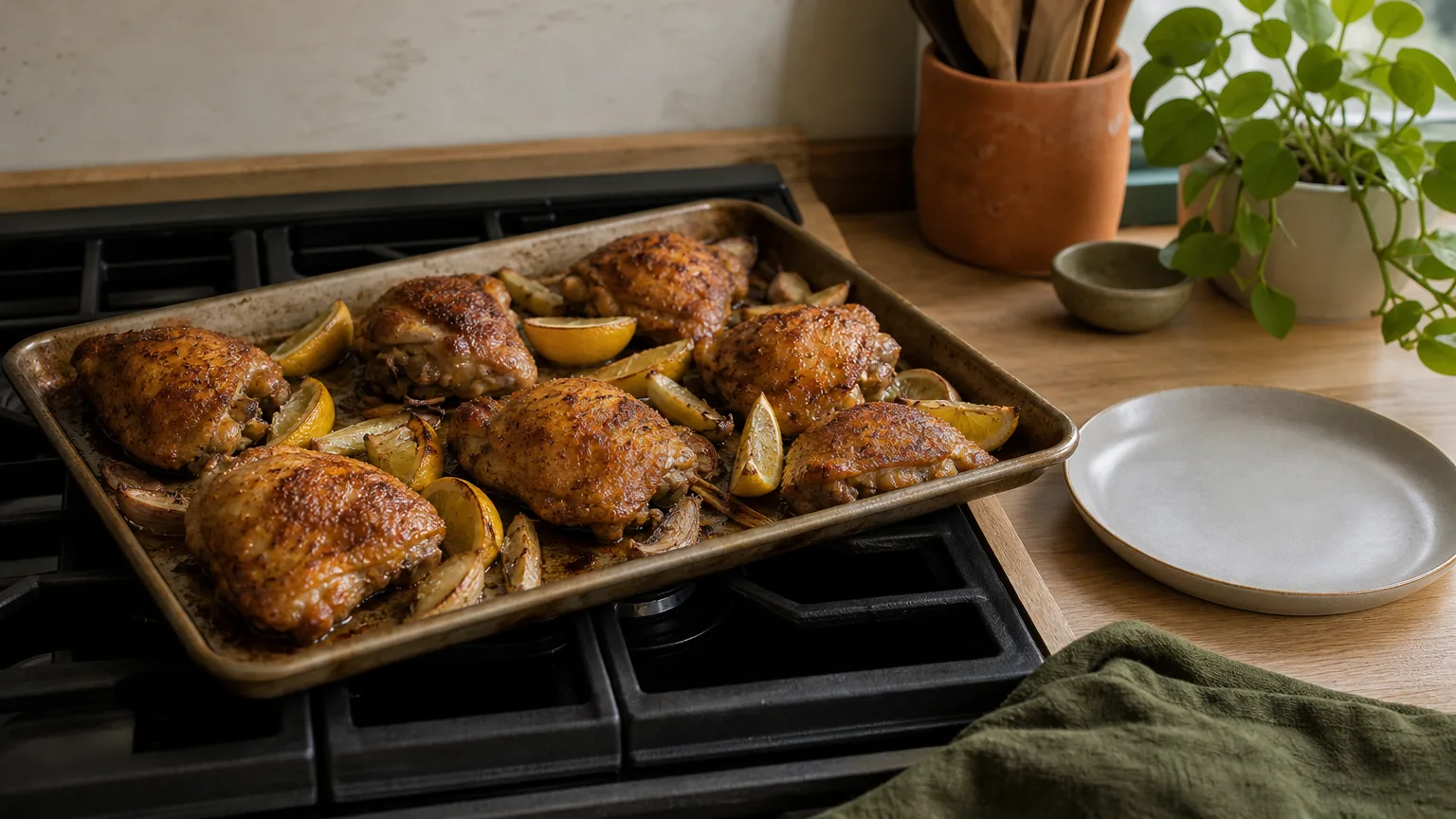
The least effort over time is to stop converting at all. Enter a dish once with raw ingredients, set the number of servings, and the per-serving numbers already account for whatever happened in the pan.
In BiteTracker, create a recipe from its ingredients, scan the packaged ones, and save it. Logging a serving after that takes one tap, and the recipe book lists calories and protein per serving for dishes that are already counted.
Frequently asked questions
Do nutrition labels show raw or cooked weight?
Labels describe the food as packaged unless they say otherwise. For raw meat, dry rice and dry pasta, that means the raw or dry weight. Some labels add an as-prepared column or state a cooked serving, so read the serving size line before you log.
Does chicken have more calories cooked than raw?
Per 100 grams, yes: about 165 calories cooked against about 120 raw, because cooking drives off water and concentrates what is left. The whole piece of chicken has roughly the same calories before and after cooking, unless you add oil or other ingredients.
How much does 100 grams of dry rice weigh when cooked?
Roughly 300 grams, though it varies with the type of rice and how much water it absorbs. The calories stay the same, at about 365 for the whole portion, so cooked rice comes to about 130 calories per 100 grams.
Should I weigh meat before or after cooking for protein?
Either, as long as the entry matches. Raw chicken breast has about 22 to 23 grams of protein per 100 grams, and cooked has about 31. If you weigh cooked meat and log it with a raw entry, you undercount your protein by about a quarter.
Save the recipe and stop converting
Enter ingredients raw, set the servings, and BiteTracker works out calories and protein per portion. After that, a serving is one tap.
Sources
- FoodData Central, U.S. Department of Agriculture
- USDA Table of Cooking Yields for Meat and Poultry, Release 2, U.S. Department of Agriculture, Agricultural Research Service
- How to Understand and Use the Nutrition Facts Label, U.S. Food and Drug Administration
This article is general information, not medical advice. If you have a health condition, talk to your doctor or a registered dietitian before changing how you eat.