Simple food logging for people who hate complicated diet apps
Simple calorie tracking means logging well enough to learn from your week without turning your phone into a second job. Here is a low-effort routine that keeps the useful part of food logging and drops the rest.
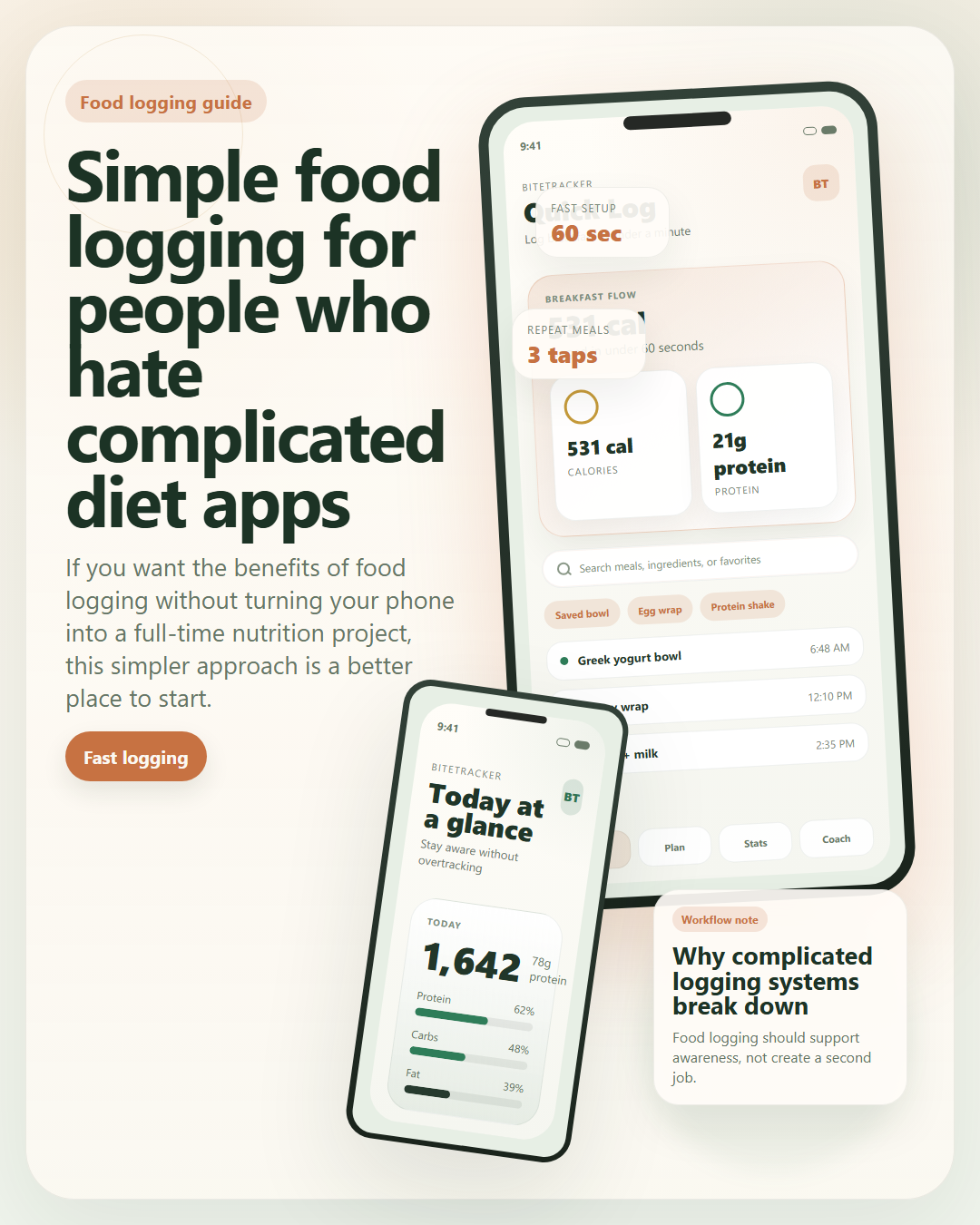
- Food logging should support awareness, not create a second job. Track calories and protein, and let the rest go.
- Fast entry matters more than precision: saved meals, copied meals, barcodes, photos and one-sentence descriptions.
- Judge the weekly average, not each entry. A rough log you keep beats a perfect one you quit.
Set up simple calorie tracking in three steps
The aim is a routine that still works on your busiest day, not a perfect record on your best one.
Save the meals you repeat most
Most people rotate through a handful of breakfasts, lunches and snacks. Log each one carefully once, save it, and from then on it is a few taps or a copy from yesterday. A few saved meals can cover a large share of a normal week.
Pick one fast method for each situation
Barcode for anything with a label, a photo or a sentence for plates, a saved or copied meal for repeats. Deciding in advance removes the searching and second-guessing that make logging feel slow.
Check the week, not the meal
Once a week, look at your average calories and protein and your weight trend. That is the only review you need, and it tells you more than any single entry ever will.
A calmer logging flow
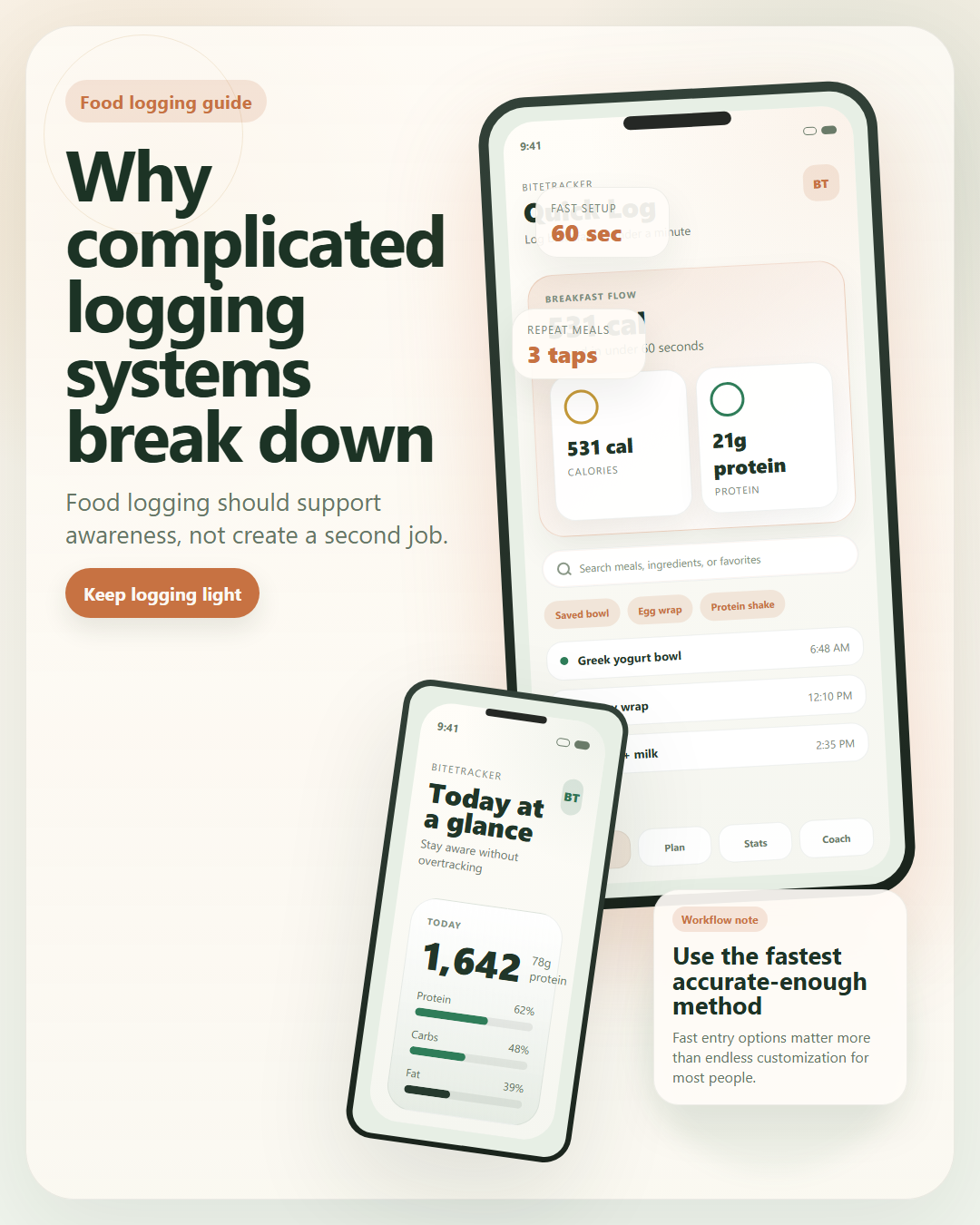
What is simple calorie tracking?
Simple calorie tracking means logging everything you eat, roughly, with the fewest possible steps. You track calories and protein, reuse meals you eat often, estimate instead of weighing, and look at the weekly average rather than each entry. It trades a little precision for a habit you can actually keep for months.
That trade is worth making. A systematic review of self-monitoring found a consistent link between tracking what you eat and losing weight, and the CDC recommends food diaries as part of weight loss. Neither says you need to weigh every gram. The benefit comes from doing it regularly.

Why complicated diet apps are hard to stick with
Most people do not quit food logging because they stopped caring. They quit because the routine became too interruptive, too detailed or too slow for a normal day. When every entry needs a search, a brand, a portion and a confirmation, consistency is the first thing to go.
Perfectionism does the rest. If a meal cannot be logged exactly, it feels easier to skip it, and one skipped meal turns into a skipped day. A simpler system keeps the useful part of tracking without making every meal feel like admin. These are signs your current setup is asking too much:
- Logging regularly takes more than about five minutes a day.
- You are watching more than two or three daily targets.
- You skip meals because you cannot find the exact food.
- You dread opening the app after a big meal.
What to track and what to skip
Pick the smallest set of numbers that still tells you whether things are working. For most people losing weight, that is two targets and one trend.
If you do not have a calorie target yet, start about 300 to 500 calories below your estimated maintenance, and generally not below about 1,200 a day for women or 1,500 for men without medical supervision. Our guide on how many calories to eat to lose weight walks through the math. Set it once and leave it alone for a few weeks.
- Track: total calories, against a single daily target.
- Track: protein, because it keeps meals filling. Our guide on how much protein you need to lose weight gives a starting number.
- Track: body weight a few times a week, judged as a weekly average.
- Optional: carbs, fat, steps and water, if you find them useful.
- Skip for now: micronutrients, weighing every ingredient and logging exact brands of fresh produce.

What is the fastest way to log food?
Use the quickest method that is accurate enough for the food in front of you; our comparison of the fastest calorie tracking apps shows which apps include each one. Roughly from fastest to slowest:
- Copy a meal from a previous day, or add a saved meal: a few seconds.
- Scan a barcode on packaged food: a few seconds, with label-accurate values.
- Describe the meal in a sentence, like two eggs, toast with butter and a coffee with milk.
- Snap a photo and review the portions. It helps to know how accurate photo calorie tracking is and what to check.
- Search the food database item by item: save this for foods you will eat again.
A worked example: one day in about three minutes
Here is what simple calorie tracking looks like on an ordinary weekday with five entries. The times are rough, but most people land in this range once their regular meals are saved.
- Breakfast, the usual yogurt bowl: copied from yesterday, about 10 seconds.
- Coffee with milk: saved drink, one tap.
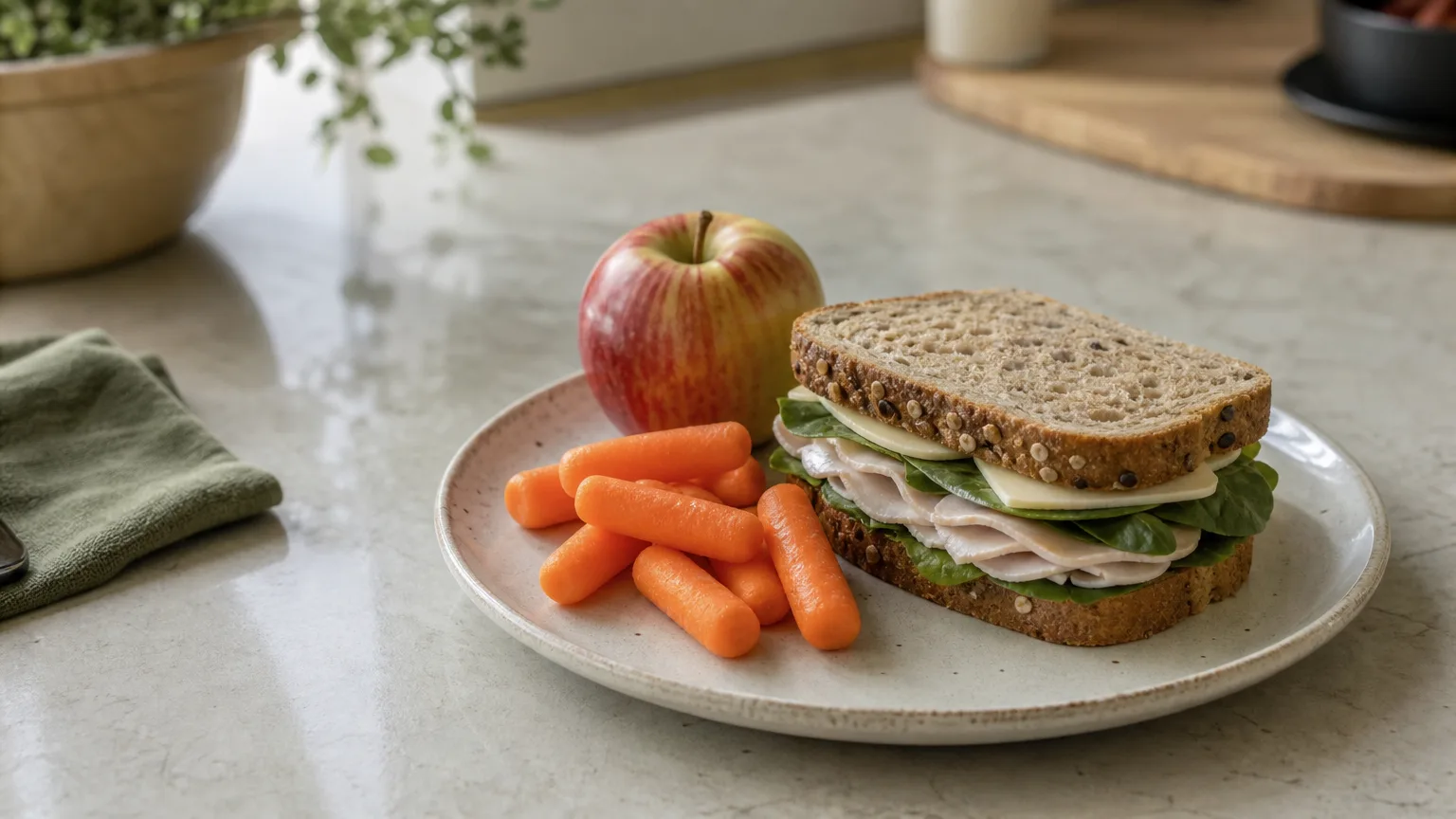
- Lunch, a turkey sandwich and an apple: described in one sentence, about 30 seconds.
- Snack, a protein bar: barcode scan, about 10 seconds.
- Dinner, chicken stir-fry at home: a photo, then one added line for the tablespoon of oil, about a minute.
- Total: roughly two to three minutes for the whole day.
What to do when you miss a meal or a day
Log a rough estimate as soon as you remember, even the next morning, and move on. Do not wait for Monday to restart. A guessed entry keeps your weekly average far closer to the truth than a blank, and our guide on what to do when you forget to log a meal covers how to estimate it.
If whole weeks get chaotic, shrink the routine instead of dropping it: log only dinner and snacks, or only calories. Our tips for staying consistent with calorie tracking when you are busy show how to keep a minimum version going.
How to know if simple calorie tracking is working
Look at two numbers once a week: your average daily calories compared with your target, and your average weight compared with the week before. Judge progress over 2 to 4 weeks, not single weigh-ins. A healthy pace is about 1 to 2 pounds a week, and a review of self-weighing studies found regular weighing was linked with more weight loss, without adverse psychological effects.
If the average weight has not moved for 3 to 4 weeks, tighten one thing at a time: log cooking oil and drinks, or check a few portions. If you want logging to be even lighter, planning the week ahead helps, since planned meals are already half logged. Our one-hour weekly meal plan for weight loss shows how. In BiteTracker, the weekly report shows your average calories and macros alongside a weight projection, so this review takes a minute.
Frequently asked questions
What is the easiest way to count calories?
Save the meals you eat most often, copy repeats from previous days, and scan barcodes on packaged food. For everything else, describe the meal in a sentence or take a photo and check the portions. Track calories and protein only, and judge progress on your weekly average rather than individual days.
Do I need to weigh my food to lose weight?
No. Weighing is the most precise option, but many people lose weight with estimates based on hand portions, labels and saved meals. What matters most is logging consistently. If progress stalls for 3 to 4 weeks, weighing a few foods you eat often for a week can show whether your estimates run low.
Is it enough to track only calories and protein?
For most people trying to lose weight, yes. Calories determine whether you are in a deficit, and protein helps keep meals filling and supports muscle. Carbs and fat can vary to suit your taste. If you have a medical condition that affects your diet, ask your doctor or a registered dietitian what to track.
How long should you track calories?
There is no fixed rule. Many people track closely for a few months while they learn portions and habits, then switch to lighter tracking, such as logging only on some days or only certain meals. If your weight trend starts drifting, a few weeks of full logging usually shows why.
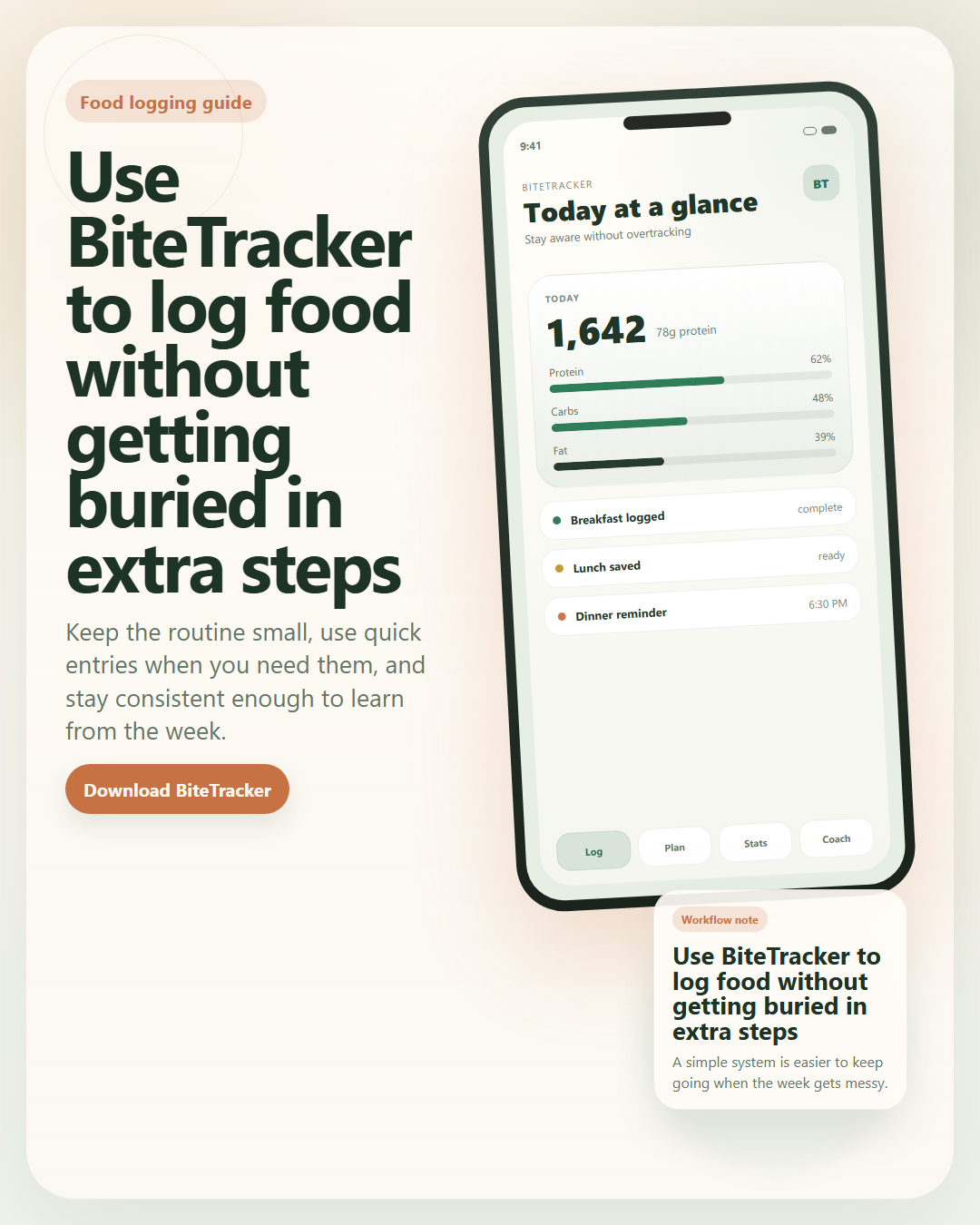
Use BiteTracker to log food without getting buried in extra steps
Save the meals you repeat, snap or describe the rest, and let the weekly report show your average calories, protein and weight trend.
Sources
- Self-monitoring in weight loss: a systematic review of the literature, Burke LE et al., Journal of the American Dietetic Association, 2011
- Steps for Losing Weight, Centers for Disease Control and Prevention
- Self-weighing in weight management: a systematic literature review, Zheng Y et al., Obesity, 2015
This article is general information, not medical advice. If you have a health condition, talk to your doctor or a registered dietitian before changing how you eat.