How to meal plan without cooking a different dinner every night
You can meal plan without cooking every night by batch cooking a few bases and turning each one into two different dinners. You get most of the variety for about half the shopping, cooking and logging.
- Choose two or three bases a week: a protein, a pot of grains or beans, and a sauce or tray of roasted vegetables.
- Turn each base into two different dinners by changing the format and the flavor: bowl, taco, pasta, soup, salad.
- Save each base once as a recipe with servings. Every dinner after that is one serving of the base plus a few extras to log.
Plan around bases, not recipes
A base is something you cook in bulk that can become more than one dinner. Three bases cover most of a week.
Pick three bases
Choose one protein base, like shredded chicken, ground turkey or baked tofu; one starch base, like rice, potatoes or lentils; and one flavor base, like a tomato sauce, roasted vegetables or a big batch of salsa. Cook them on one or two evenings, which usually takes 60 to 90 minutes in total.
Give each base two formats
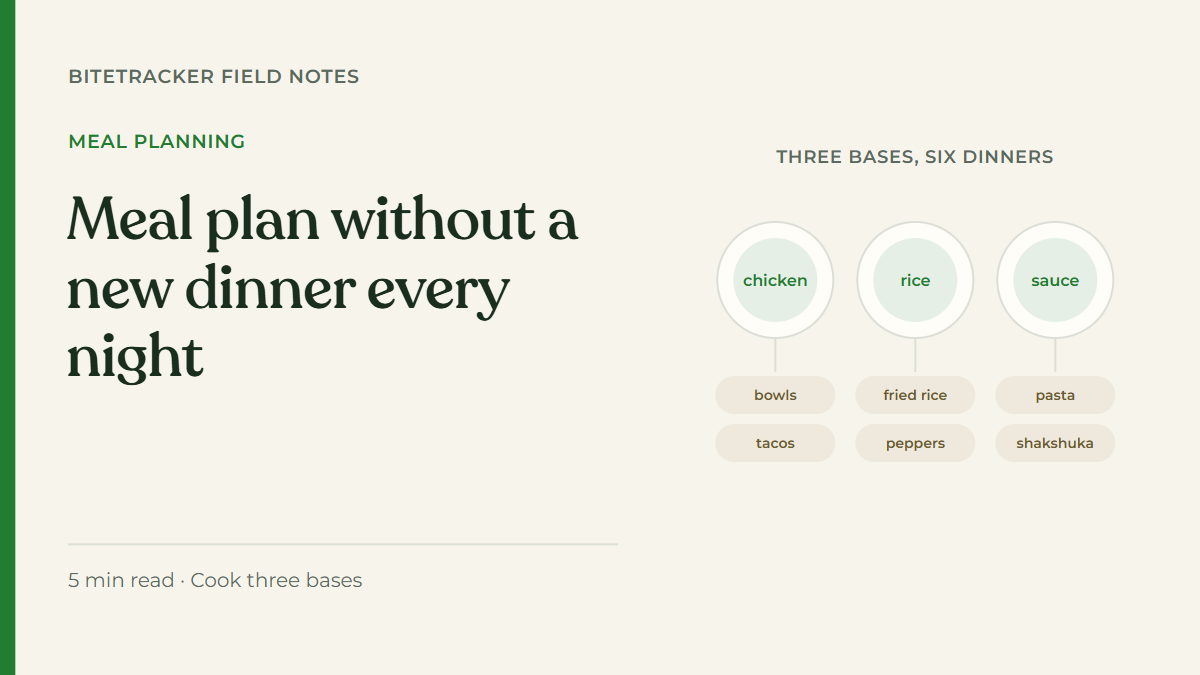
The same chicken can be a rice bowl on Monday and tacos on Wednesday. The same tomato sauce can be pasta one night and shakshuka the next. Changing the format and the seasoning is what makes it feel like a new meal rather than leftovers.
Leave one night open
Plan five or six dinners, not seven. One unplanned night absorbs a dinner out, a late meeting or the bases running out a day early, so the plan survives the week instead of breaking on Thursday.
How do you meal plan without cooking every night?
To meal plan without cooking every night, batch cook two or three versatile bases on one or two evenings, such as shredded chicken, a pot of rice and a tomato sauce. Then combine them into five or six different dinners by changing the format and seasoning. Most weeknights become 10 to 15 minutes of assembly and reheating.
This is different from classic meal prep, where you portion identical meals into containers. Bases stay flexible, so you decide on the night whether the chicken becomes a bowl, tacos or soup. That flexibility is what stops the food from getting boring by day three.
Why a meal plan without cooking every night is easier to follow
A different recipe every night means a long shopping list, half-used ingredients and a new cooking decision at the end of every day. It also means seven new things to log. It is a big part of why many meal plans look great on Sunday and fall apart by Wednesday.
Cooking a few bases in bulk and remixing them gets you most of the variety for a fraction of the effort. You shop for fewer ingredients, waste less, and cook properly on only one or two nights.
What makes a good batch cooking base?
A good base is plainly seasoned, so it can go in several directions, and holds up well in the fridge. Save the strong flavors, like curry paste, taco seasoning or pesto, for the night you eat it.
Cooked food generally keeps 3 to 4 days in the fridge. For a base you will not finish by then, freeze half on the day you cook it and move it to the fridge the night before you need it.
- Seasoning: salt, pepper, garlic and onion only.
- Texture: slightly undercook vegetables and grains that will be reheated.
- Quantity: enough for two dinners plus one or two lunches.
Batch bases that remix well
These are reliable starting points. Each one turns into at least three different dinners.
- Shredded chicken thighs: bowls, tacos, wraps, soup, fried rice.
- Ground turkey or beef with onions: pasta sauce, lettuce wraps, stuffed peppers, chili.
- A pot of rice or quinoa: bowls, fried rice, stuffed vegetables, a side for anything.
- Cooked lentils or black beans: soup, tacos, salads, curry.
- A tray of roasted vegetables: pasta, grain bowls, omelets, blended into soup.
- A big batch of tomato sauce: pasta, shakshuka, pizza, braised beans.
A sample week: three bases, six dinners
On Sunday, cook 2 pounds of boneless, skinless chicken thighs, about 6 cups of cooked rice and a pot of tomato sauce. That is roughly 90 minutes of mostly hands-off cooking. Split the chicken into six servings of about 180 to 210 calories and 28 to 30 grams of protein each, and freeze two. A cup of cooked white rice is about 200 calories.
- Sunday: chicken rice bowl with roasted vegetables and salsa, about 500 calories.
- Monday: pasta with tomato sauce and a side salad.
- Tuesday: chicken tacos with three corn tortillas, cabbage and a spoon of sour cream, about 400 to 450 calories.
- Wednesday: shakshuka (eggs baked in the tomato sauce) with toast.
- Thursday: chicken fried rice with frozen peas and an egg.
- Friday: open, for a dinner out or whatever is left.
- Saturday: chicken tortilla soup from the frozen portion.
How to track calories when you cook in batches
Batch cooking makes tracking easier, not harder, as long as you log the base once. Enter the raw ingredients as a recipe, including the oil, and set the number of servings you will split it into. Every serving then carries the right calories and protein, and each dinner is one serving of the base plus the extras. For the details, including uneven portions, see how to count calories in homemade food.
The extras are where the numbers drift. Oil, cheese, sour cream and dressings add up quickly: one tablespoon of oil is about 120 calories. Our guide to hidden calories in oils and sauces shows which ones to measure.
How to keep batch-cooked dinners from getting boring
Change at least two of the three things that make a meal feel different: format, flavor and texture. Chicken over rice with soy and ginger, then chicken in a crisp taco with lime and chili, share a base but not an experience.
Keep a few cheap flavor changers on hand, such as salsa, hot sauce, lemons, fresh herbs and pickled onions. For new remix ideas, browse the dinner recipe collection or the cheap high protein meals guide, and pick dishes that share a base you already cook.
Where bases fit in your weekly plan
Bases cover dinners and often lunches, which is most of the week's planning. If you also want to set daily calorie budgets, repeat breakfasts and shop once, the one-hour weekly meal plan shows how bases fit into the rest of the week.
In BiteTracker, save each base as a recipe, drag the dinners onto the calendar, check calories and protein for each day before you shop, and send the ingredient list to Instacart in one order. When dinner comes, the meal is already planned and takes a tap to log.
Frequently asked questions
How long do batch-cooked meals last in the fridge?
Most cooked foods keep about 3 to 4 days in the fridge. If you batch cook on Sunday, plan to eat each base by Wednesday or Thursday, and freeze a portion on the day you cook it for later in the week. Cool food quickly and store it in shallow, covered containers.
How many bases should I cook for a week?
Two or three bases are enough for most households: one protein, one starch and one sauce or vegetable base. Together they cover five or six dinners and a few lunches. More than three usually means more leftovers than you can eat before they need freezing.
Is batch cooking good for weight loss?
It can help, because meals that are already cooked and already counted make it easier to stay near a calorie target on busy nights. Batch cooking does not cause weight loss by itself. It removes the moments, like a late, hungry evening with nothing ready, when takeout usually wins.
How do I log a meal made from leftovers?
If the original dish is saved as a recipe with servings, log one serving and add any new extras, like tortillas, cheese or dressing. If it is not saved, estimate by components: the protein, the starch and any added fat, each by its usual portion.
Put your bases on the calendar in BiteTracker
Save each base as a recipe with servings, drag the dinners onto the week, see calories and protein for each day, and send the ingredients to Instacart in one order.
Sources
- FoodData Central, U.S. Department of Agriculture
- Tips for Healthy Eating for a Healthy Weight, Centers for Disease Control and Prevention
- Dietary Guidelines for Americans, U.S. Department of Agriculture and U.S. Department of Health and Human Services
This article is general information, not medical advice. If you have a health condition, talk to your doctor or a registered dietitian before changing how you eat.